
Webster County Criminal Court Cases
Two local courts divide Webster County criminal court cases by stage and offense. Webster County Circuit Court hears felony prosecutions after indictment and keeps pleas, trials, judgments, sentences, and expungement petitions. Magistrate Court handles misdemeanors, criminal complaints, warrants, initial appearances, bail, and preliminary felony proceedings. A felony can therefore create a Bell Street magistrate file before a related Circuit Court docket exists.
The Circuit Clerk, not the County Clerk, is the custodian for felony case papers. The County Clerk's published work concerns elections, probate, vital records, land records, and county commission business. Municipal ordinance matters may follow a town channel, but no reviewed Webster Springs, Cowen, or Camden-on-Gauley site supplies a public municipal docket. Start with the court whose jurisdiction matches the alleged offense and stage, rather than asking one office for a countywide name report.
Webster County Felony Files in G-4
The Webster County Circuit Clerk works in Room G-4 of the Webster County Courthouse, 2 Court Square, Webster Springs, WV 26288. The current Judiciary directory lists Keith Stout as Circuit Clerk and gives 304-847-2421 for the office. An older county page names a different clerk, so the current Judiciary directory is the safer source for personnel before a visit.
Call with the defendant's full name, an approximate filing year, and the exact case number when known. Ask staff to locate a public docket, identify the final disposition, quote current copy or certification costs, and explain delivery options. Published counter hours are unavailable, so call to confirm hours. The official county magistrates page shows how Webster County presents local judicial contacts. View that official court contact source before relying on an old directory.
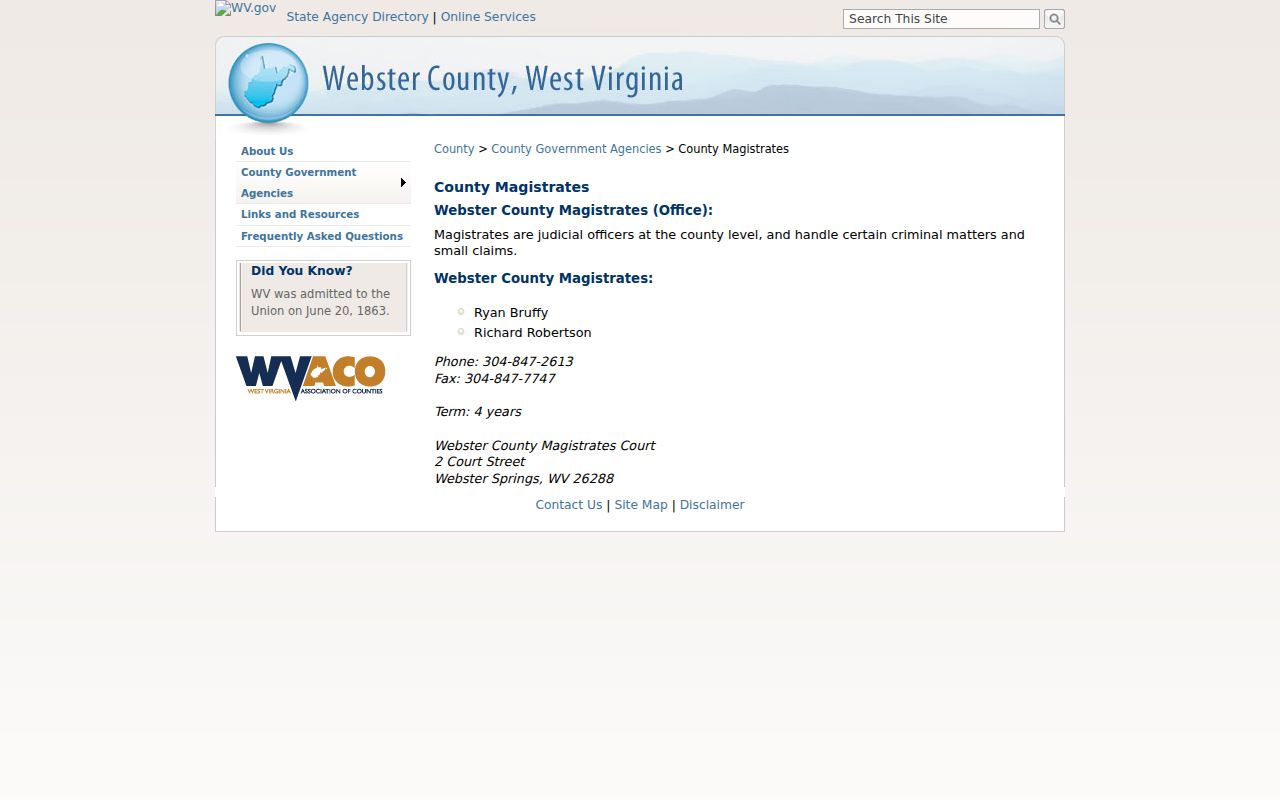
The page reinforces that court contacts, not a commercial name database, are the local path to Webster County case records.
Searching Webster County Case Records
No public portal exposes ordinary Webster County Circuit and Magistrate criminal dockets. The practical search fields are the details a clerk needs to distinguish files. Use a case number first. If it is unknown, supply a legal name and approximate year, then confirm the court and case type before ordering papers.
- Choose Circuit Court for an indicted felony or Magistrate Court for a misdemeanor, complaint, initial appearance, or preliminary felony matter.
- Call the clerk with the full name, approximate year, and case number if known. Ask for matching public criminal cases.
- Request the docket sheet and final disposition first. Those records show the event sequence and outcome with less guesswork.
- Identify the complaint, indictment, plea, judgment, sentencing order, or other public filing needed after reviewing the docket.
- Ask about current copy and certification charges, archived retrieval, and mail or electronic delivery before placing the order.
| Search Detail | Format | Priority | Use |
|---|---|---|---|
| Case number | Exact text | Best identifier | Routes directly to one court file |
| Full legal name | Text | Needed without a number | Finds possible party matches |
| Approximate year | Year or range | Strongly recommended | Narrows current and archived indexes |
| Court level | Circuit or Magistrate | Needed | Directs the request to the right clerk |
| Document wanted | Docket, order, or pleading | Needed for copies | Defines the record and certification request |
West Virginia's court rules govern court practice and access questions that a general public-records request does not settle. The captured rules page gives readers an official starting point.
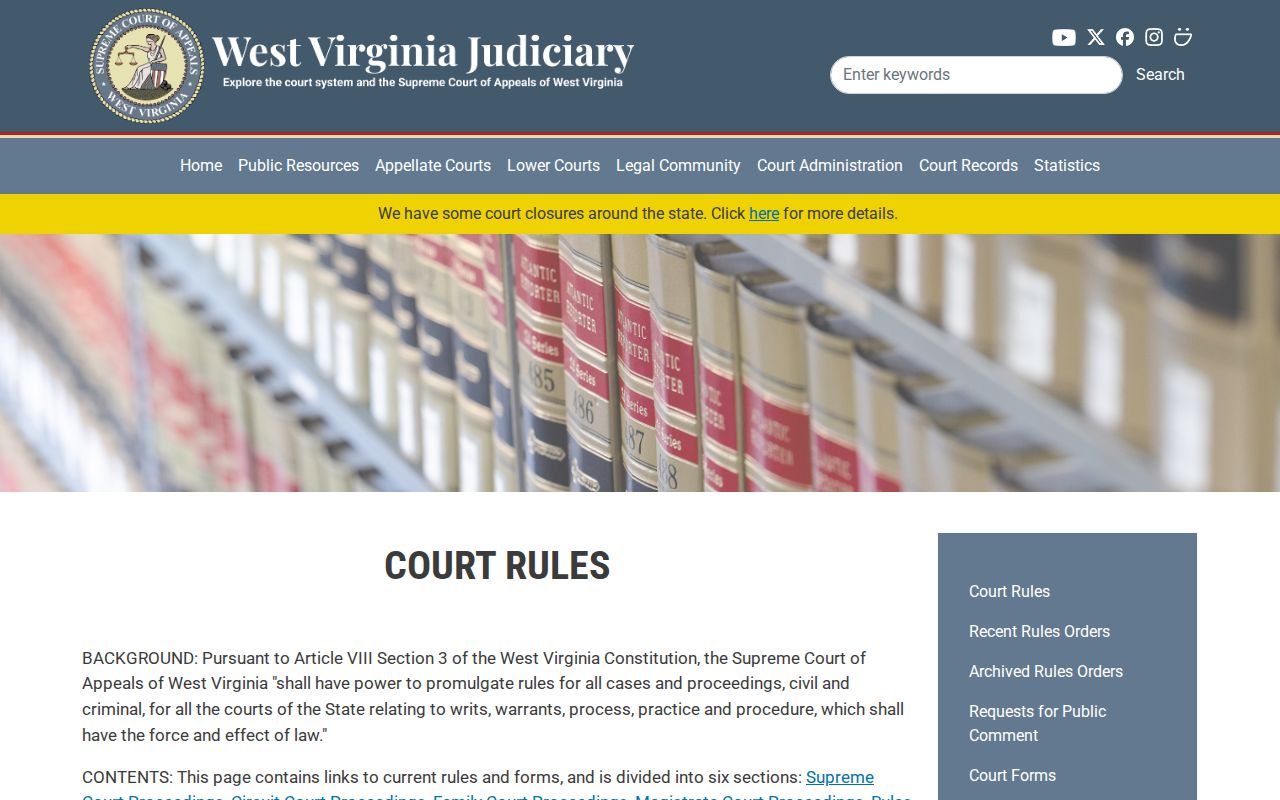
Use the current rules and the clerk's instructions together when a filing is restricted, sealed, or subject to a special access procedure.
Webster County Cases Starting on Bell Street
Magistrate Court operates at 112 Bell Street, Suite A, Webster Springs, WV 26288, with a published phone number of 304-847-2613. The current directory lists Magistrate Clerk Pam McCourt and Magistrates Ryan Bruffy and Danny J. Davis. Published counter hours are unavailable, so call to confirm hours and ask about the safest way to obtain a public docket or order.
A warrantless arrest requires prompt presentment to a magistrate under West Virginia law. That early proceeding can produce a complaint, probable-cause material, a bail order, hearing dates, and preliminary records. A misdemeanor may remain in Magistrate Court through disposition. A felony may later move to Circuit Court after indictment. When a caller checks only Room G-4 too soon, the absence of a circuit number may mean the case is still at the magistrate stage, not that the arrest or complaint never existed.
Inside a Webster County Case File
A Webster County criminal case file records a prosecution, not a complete life history. Start with its docket and final judgment. Then use specific pleadings and orders to understand how the filed charge changed, what the court decided, and what sentence or supervision followed.
| Case Number and Court | Identifies the Circuit or Magistrate file and its filing year. |
|---|---|
| Charging Document | Shows the complaint, indictment, or information and the cited offense. |
| Docket Entries | Chronologically lists filings, hearings, motions, pleas, orders, and other public events. |
| Hearing Details | May show dates, judge, counsel, and bond changes when public. |
| Disposition and Judgment | Distinguishes pending, dismissed, acquitted, pleaded guilty, and convicted outcomes. |
| Sentence and Conditions | May state jail or prison terms, credit, probation, costs, and court-ordered conditions. |
The West Virginia Judiciary maintains a court forms hub, though a form's presence does not prove that it fits a specific criminal filing.
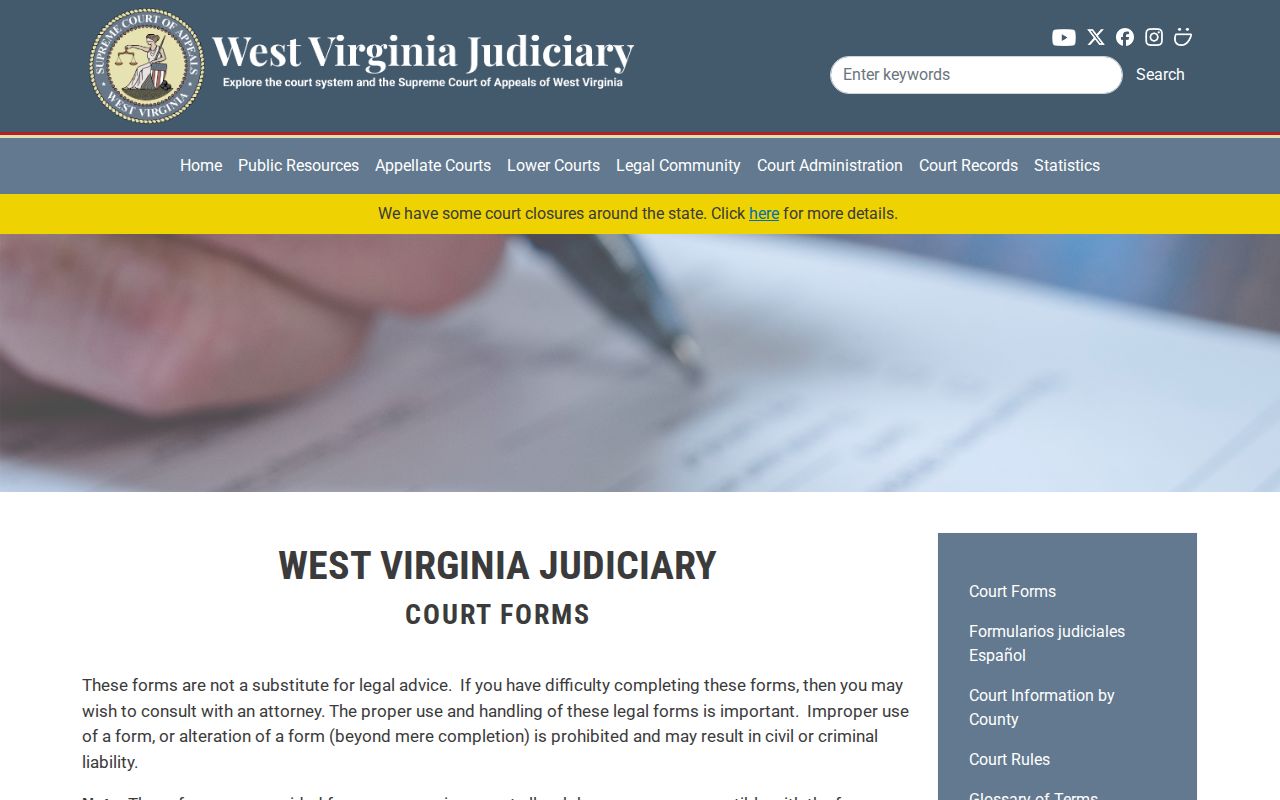
Confirm the current form and filing method with the Webster County clerk before submitting anything.
Reading Webster County Docket Events
An indictment states the felony charges returned for Circuit Court consideration. It is not a conviction. An arraignment records the defendant's initial circuit-level appearance and plea. Pretrial entries can show motions, scheduling, discovery disputes, and bond changes. A plea order records an admitted resolution, while a judgment after trial records the verdict and formal result.
- Complaint
- A sworn allegation that often begins the magistrate file.
- Indictment
- A grand jury's formal felony accusation, not a finding of guilt.
- Disposition
- The recorded outcome, such as dismissal, acquittal, guilty plea, or conviction after trial.
- Certified copy
- A clerk-authenticated court record used when reliable proof of the outcome is needed.
Compare the charge in the final judgment with the first complaint or booking entry. Charges can be amended, rejected, or dismissed. The court's final order controls the court outcome, while an arrest record merely shows what was alleged at intake. For the earlier custody layer, the county's arrest lookup process explains the separate agency and jail records.
How a Criminal Case Moves
Many Webster County felony matters begin in Magistrate Court, then move to Circuit Court if an indictment follows. Each step creates its own event or paper. A dismissal can end the path before trial, and a guilty plea can replace trial, so no file follows every branch.
Case flow: Charges Filed › Arraignment › Pretrial › Plea or Trial › Disposition › Sentencing
The Seventeenth Judicial Circuit covers Webster, Braxton, Clay, and Gilmer counties. Current judges may have their main offices outside Webster County, yet the Webster file remains with its proper clerk. That regional structure explains an out-of-county chambers address without changing where the local public docket is requested.
Webster County Federal Case Boundaries
Federal prosecutions tied to Webster County do not appear in Room G-4. Webster lies in the U.S. District Court for the Southern District of West Virginia. PACER provides federal docket sheets and filed documents after account registration, with charges governed by its current schedule.
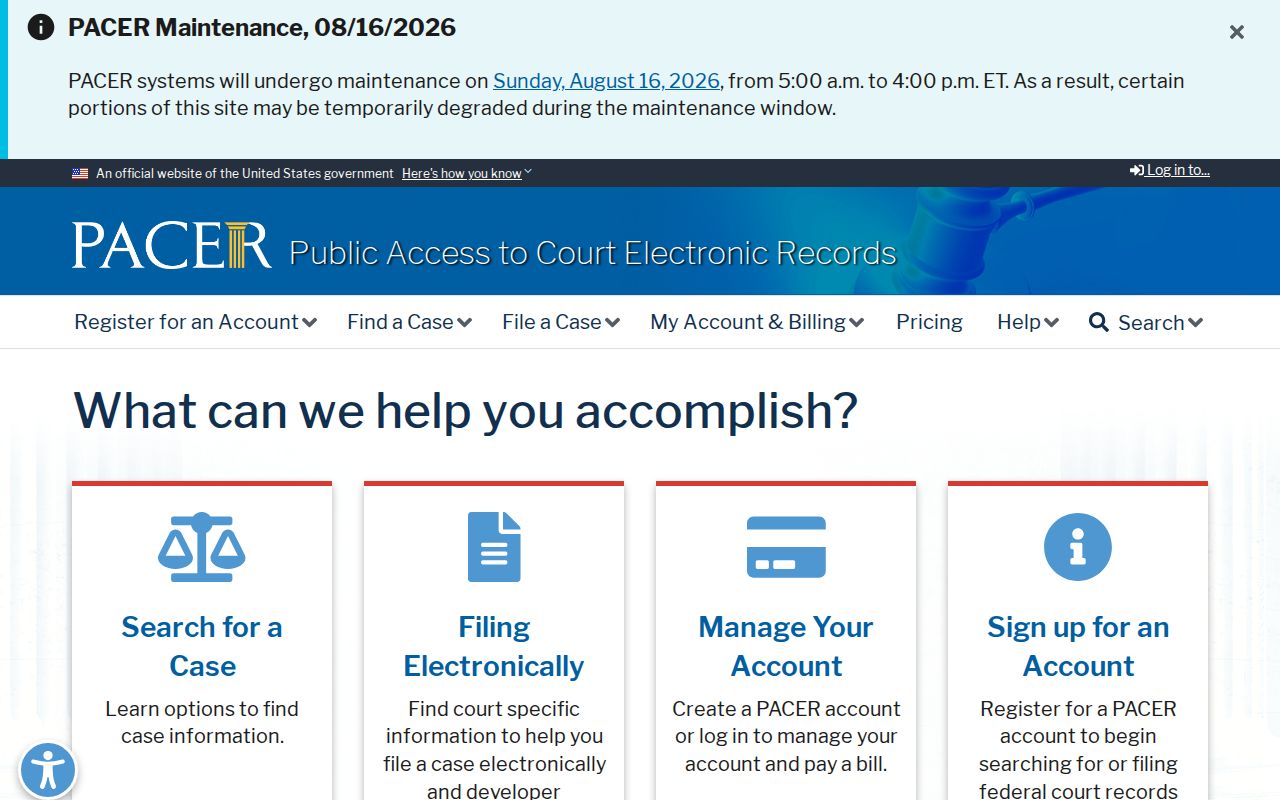
PACER is the official federal access layer, but it does not replace Webster County Circuit or Magistrate records.
The Southern District of West Virginia identifies the federal court and its current divisions and contacts.
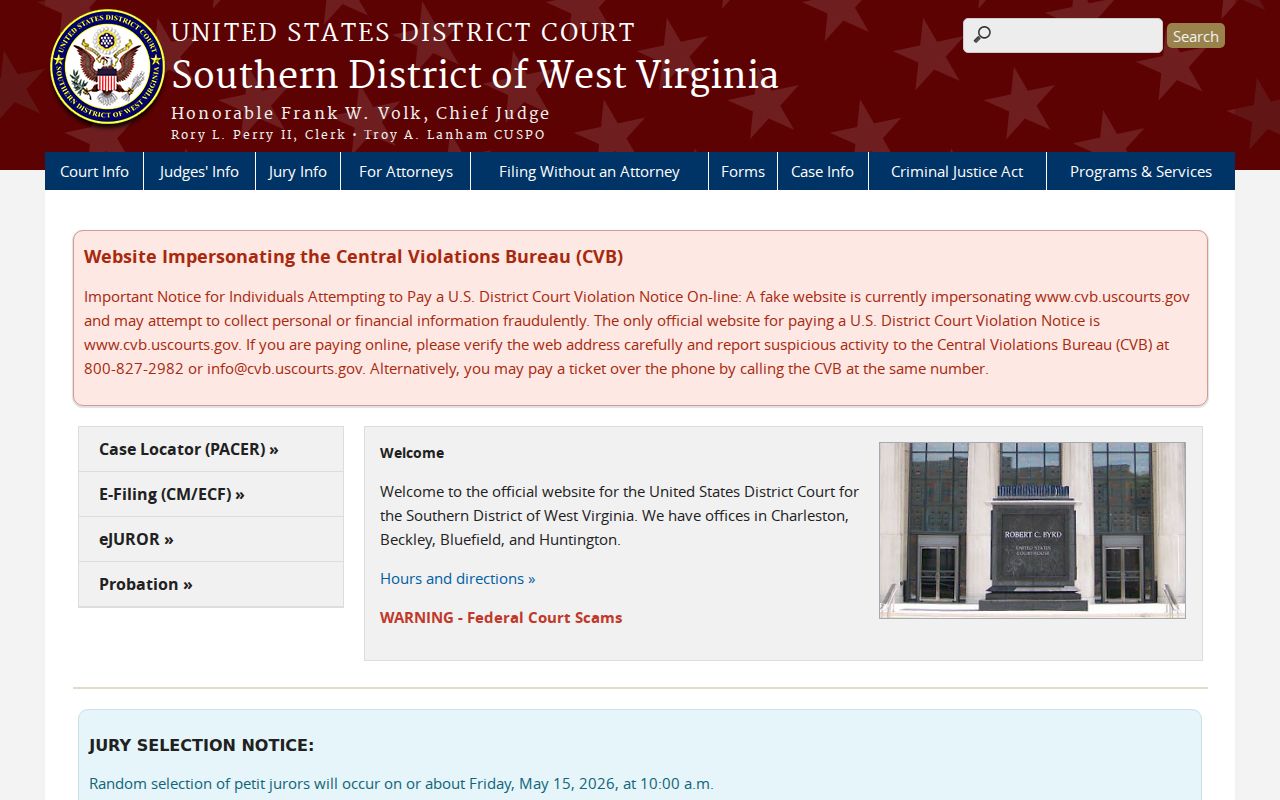
Check the district's official site for venue before selecting a courthouse, since federal division assignment depends on the case.
Case Record Access and Restrictions
West Virginia law favors access to public records, but court records also follow Judiciary rules. Juvenile matters are confidential under West Virginia Code §49-5-101. Sealed or expunged records, protected victim information, private identifiers, and some investigative material may be withheld or redacted. A name search can also miss older paper files or records indexed under a different form of a name.
When a Webster County case does not appear, ask the correct clerk whether an archived public index can be checked. Give a narrow year range. If access is denied, ask which court rule, sealing order, or statute controls. A West Virginia FOIA request is useful for identifiable records held by a public body, but it does not override judicial restrictions or compel an office to create a custom criminal history.
Webster County Certified Case Outcomes
A WVDCR custody entry or officer report cannot certify how a Webster County charge ended. When the exact result matters, request the docket and final disposition from the court that entered the judgment. Ask whether a plain copy is enough for personal review or whether a certified copy is needed. The county publishes no current court copy or certification schedule, so obtain the amount from the clerk rather than borrowing another county's fees.
Keep the case number, the date of the clerk's search, and the record received. If a personal fingerprint history shows the wrong charge or disposition, take the court's final order to the originating court or arresting agency first, then follow the West Virginia State Police CIB challenge instructions. Correction makes a record accurate. Expungement changes access after a qualifying court order. They are not the same remedy.